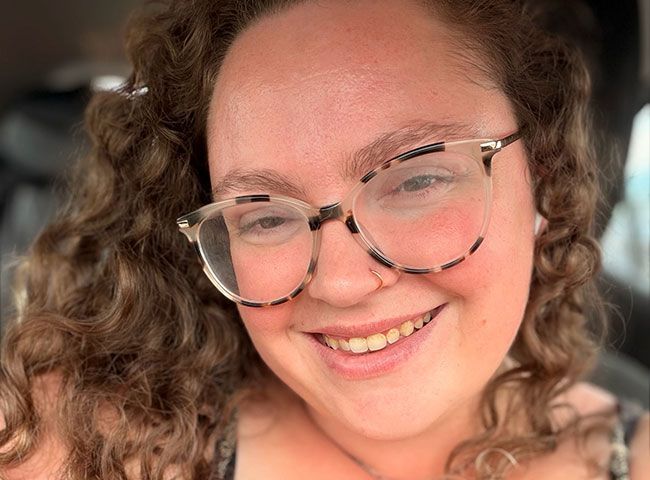
For years, the woman at the centre of one of Canada’s most high-profile sexual assault trials was known only by initials. Protected by a publication ban, she was referred to in court and media coverage simply as “J.B.” — the complainant in the case against Canadian musician Jacob Hoggard. In a CBC Passionate Eye documentary, she chose to step forward publicly for the first time and share her name: Jessica Baker. Her testimony about a 2016 assault in a Toronto hotel room would later lead to Hoggard’s conviction for sexual assault in 2022, but the years between the assault and the verdict placed her at the centre of intense public scrutiny, harassment, and a national conversation about power, celebrity, and the justice system. By revealing her identity, Baker shifted the story away from courtroom initials and back to the person behind the case.
My Name is Jessica Baker: Sexually Assaulted by Jacob Hoggard

When survivors of sexual violence come forward, their stories often move through multiple systems at once: media, public opinion, and the legal process. Each stage brings its own pressures, expectations, and scrutiny.
The case involving Canadian musician Jacob Hoggard, former lead singer of the band Hedley, became one of the most widely discussed sexual assault trials involving a public figure in Canada. For many people watching the events unfold, the case became not only about the allegations themselves but also about how survivors experience the justice system when they decide to speak.
Understanding how the story unfolded, from the first disclosures to the courtroom and beyond, helps illustrate the path many survivors navigate when their experiences enter the public and legal arenas.
Jacob Hoggard rose to national prominence in the early 2000s after appearing on the television competition Canadian Idol. Following the show, Hedley quickly became one of Canada’s most recognizable pop-rock bands. The group released multiple successful albums, toured internationally, and maintained a strong presence on radio and television.
For years, Hoggard’s public image was closely tied to that success. That visibility would later shape how allegations against him were reported, discussed, and examined.
In 2018, investigative reporting began to surface allegations from women who described encounters with Hoggard after meeting him through social media or following concerts. Their accounts described interactions that began with online communication and eventually led to in-person meetings.
Among the women who later spoke publicly about their experiences was Jessica. Her decision to come forward was not only about the legal process but also about how survivors are often expected to present themselves in order to be believed.
“I didn’t get therapy because I wanted to tell the story like as an unhealed person. For people to believe you, they have to see you as a victim.”
Jessica’s statement reflected a reality many survivors describe: the perception that credibility is often tied to how closely a person’s behaviour matches expectations of how a victim should appear or respond. It also underscores a tragic dimension of that pressure—her decision not to seek therapy for her own wellbeing because she believed that healing might make her story seem less credible to a court or the public.
As the allegations began receiving media attention, more women shared accounts with journalists and investigators. The reporting quickly expanded, prompting broader conversations across Canada about power dynamics in the music industry and the experiences of fans who interact with performers.
Soon after the allegations became public, the situation began shifting from media reporting and public discussion into the formal legal process. As attention around the allegations grew, law enforcement began investigating the claims, eventually leading to criminal charges and a trial.
The transition from media reporting to courtroom proceedings marked a significant shift. In the legal system, the focus turns to evidence, testimony, and cross-examination. Survivors who participate in trials are often required to recount their experiences in detail, sometimes multiple times, while facing questioning from defence lawyers whose role is to challenge their credibility and recollection.
Jessica later described the emotional intensity of that experience in court.
“Going to court was like a second assault, and worse, because you are sitting in front of the person that did the worst thing possible to you. And their defence lawyer, he is hired to make you feel like you are nothing.”
The courtroom environment can be highly structured and formal. Witnesses testify under oath while lawyers examine the details of their statements, timelines, and actions before and after the alleged events.
Jessica later reflected on the experience of testifying, describing the sense of being unable to leave the room and how the feeling mirrored what she experienced during the actual assault.
“I couldn’t leave, and I was just thinking, like, you just have to get through it, and then it’ll be over. It’s the exact same feeling, amplified…in front of a room full of strangers, and him and his wife.”
Throughout the trial, the women who came forward faced scrutiny that extended beyond the courtroom. Their credibility, choices, memories, and personal lives were widely discussed in both legal arguments and public commentary.
The trial highlighted how difficult it can be for survivors to participate in legal proceedings involving sexual violence.
Sexual violence scholar and activist Dr. Caroline Heldman reflected on the broader implications of watching the process unfold.
“I don’t think anyone watching the Hoggard trial would want to come forward after that, frankly, because of what the survivors face. It’s really hard to come forward as a survivor and get any form of justice.”
“Sexual violence is the only crime where we put the survivor on trial. Defence attorneys really go after them in dehumanizing ways, motivated to attack survivors’ credibility.”
The verdict was delivered. Jacob Hoggard was found guilty of sexual assault, a moment that Jessica had been waiting for, and had put her life on hold to pursue. However, for survivors, the moment a verdict is read does not close the experience of going through the justice process. The months or years leading up to that point — reporting, investigations, preparation for testimony, and the trial itself — often shape how survivors carry the experience forward. As with many sexual assault cases, the public conversation focused heavily on the result, while survivors continued to process what it meant to have their experiences examined in such a public and demanding setting.
Data from Statistics Canada, frequently cited by legal scholars and advocates, shows that only a small fraction of sexual assaults are ever reported to police. Of those that are reported, roughly four in ten result in charges, and just over half of the cases that proceed to court end in a guilty verdict. The numbers illustrate how rare it is for a sexual assault incident to result in a conviction, a reality that often shapes how survivors think about reporting and participating in the justice process. Jessica offers the following insight:
“A not-guilty verdict is not an innocent verdict.”
In Canada’s criminal justice system, a not-guilty verdict indicates that the prosecution did not prove the charges beyond a reasonable doubt. It does not necessarily determine how individuals involved interpret or process their experiences.
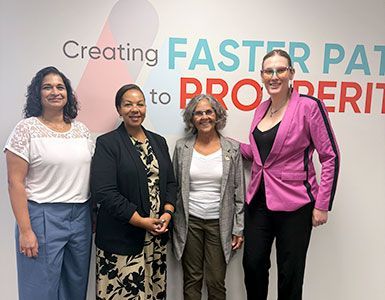
In the months and years following the trial, Jessica began speaking publicly about the broader realities survivors face during and after legal proceedings. Those conversations eventually led Jessica to establish Beyond the Verdict, together with Keely Favro and Kristi Lee.
The organization focuses on what happens after the courtroom process ends. Rather than centering solely on legal outcomes, it examines the experiences of survivors navigating investigations, trials, and the aftermath of highly public cases.
Through interviews, discussions, and shared stories, the initiative highlights the gap that can exist between a legal decision and the lived realities of those involved.
The conversation surrounding the Hoggard case continues to raise questions about the sequence of events that unfold when survivors come forward. Observers have reflected on the roles played by media coverage, public debate, police investigations, and courtroom procedures.
Those conversations are continuing through projects like Beyond the Verdict, which seek to examine not only what happens inside the courtroom but also what happens before it—and long after it ends.
See full CBC documentary: https://www.youtube.com/watch?v=OJsvxLQWnxo
If You or Someone You Know Needs Support
You don’t need to be ready to leave. You don’t need to have all the answers. You just need to know you’re not alone. Serving the Halton region, Peel region and surrounding areas in Ontario
Survivor-led. Peer-supported. Compassionate. Non-judgemental. Always safe.
Let’s change the narrative. Let’s amplify survivor voices—on and off the big screen.
#ForSurvivorsBySurvivors
#AlwaysBelieve
#SAFEHalton
#GenderBasedViolence
SAFE honours the courage of Jessica Baker and all survivors who carry their truth with them every day. We see you. We believe you. We are here for you.
Blog